


Suzhou Guangu
In the precision hardware processing industry, the vast majority of manufacturers face the same core dilemma when selecting polishing equipment: Will a magnetic polishing machine consume the original dimensions of the workpiece and wear down precision edges? As a leading provider of metal polishing machines, we address this core dilemma directly. Dimensional loss and over-polishing of edges are fatal problems in the mass production of precision parts. In mild cases, the workpiece fails to meet accuracy standards; in severe cases, the entire batch is scrapped, resulting in a total loss of prior processing costs. Combining on-site measured data, this article compares the dimensional loss differences between traditional polishing processes and the Guangu magnetic polishing machine, detailing the controllable, flexible polishing solution for precision workpieces.
Manufacturers engaged in precision hardware processing, new energy accessories, and medical component production have two major fears when selecting a magnetic deburring machine. First, the equipment cannot completely remove workpiece burrs and instead over-polishes the finished dimensions, causing the workpiece tolerance to exceed standards and rendering it unusable. Second, the sharp edges and corners of the workpiece are excessively rounded, destroying the original design profile and causing the entire batch to be scrapped—wiping out all prior investments in CNC machining and forming processes. This is the core reason why many manufacturers dare not easily switch polishing equipment and continue to rely on manual grinding.
Many conventional polishing machines currently on the market appear to have outstanding polishing efficiency, but most adopt a rigid grinding mode. Relying on workpieces colliding with each other and strong abrasive friction to remove burrs, this processing method has an inherent defect: the inability to precisely control the grinding force. During processing, edge damage and excessive dimensional loss are extremely common. This is a chronic industry problem that has long been difficult to solve for polishing precision small parts and thin-walled components, making it entirely unsuitable for the mass production needs of high-precision parts.
Before engaging with the Suzhou Guangu magnetic polishing machine, many clients repeatedly confirm whether the equipment will damage workpiece dimensions or destroy precision edges. Objectively speaking, no polishing equipment can achieve absolute zero material removal, but the loss volume of traditional polishing processes completely exceeds the allowable tolerance range for precision workpieces. All data in this article is collected from the mass production sites of client factories, not idealized laboratory data, authentically reflecting mass production processing effects.
Traditional processes such as vibratory grinding and tumbling rely on the core principle of workpieces colliding with each other combined with strong abrasive friction for deburring. Under the same processing duration, the overall material removal volume of the workpiece can reach 0.02–0.05 mm, and the loss at sharp edge positions is further amplified. The most prominent problem is that edge rounding is completely uncontrollable; the right angles that the workpiece originally needed to retain are easily ground into large arcs, resulting in total scrapping. In mass production mode, the defect scrap rate caused by out-of-tolerance dimensions and edge damage in traditional processes stably ranges from 7% to 11%, and the scrap ratio for thin-walled and micro-precision parts is even higher, significantly increasing enterprise production costs.
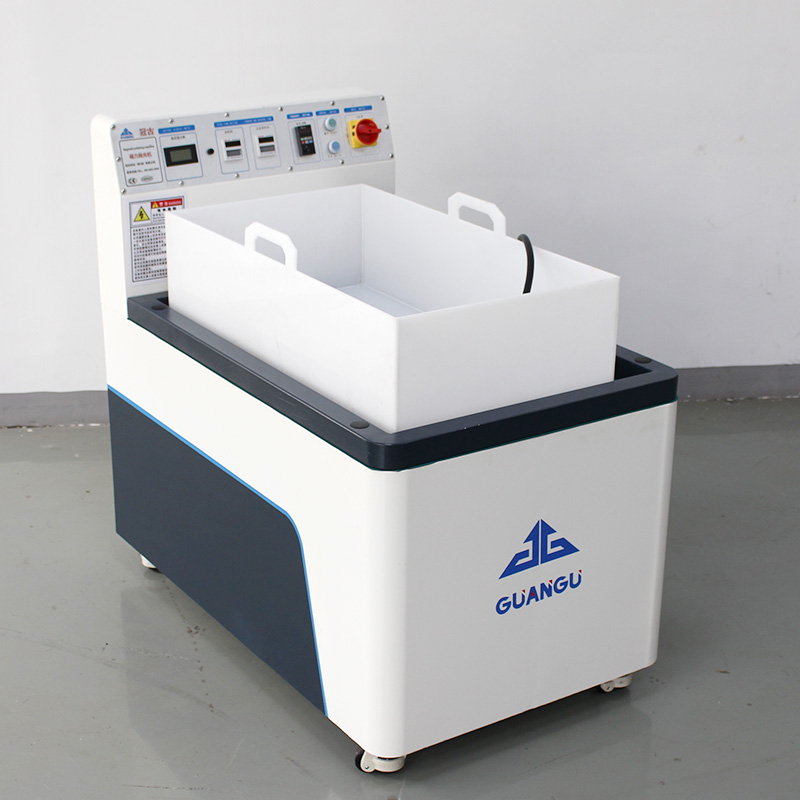
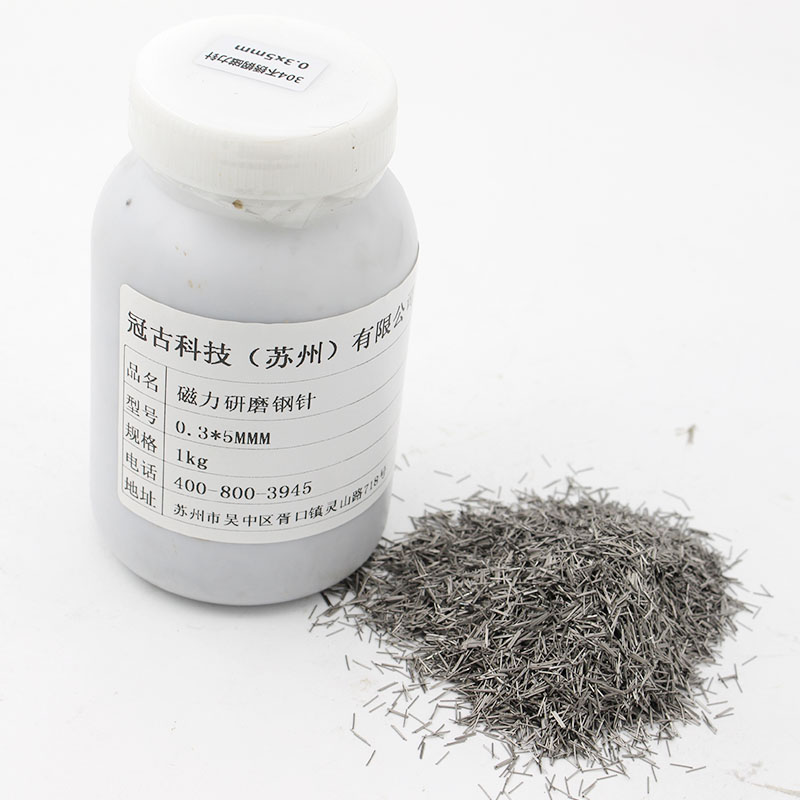
Suzhou Guangu magnetic polishing equipment adopts a differentiated magnetic field-driven flexible grinding solution, establishing itself as a superior small parts deburring machine that completely abandons traditional rigid grinding modes. The equipment uses an alternating magnetic field to drive SUS304 stainless steel magnetic pins for uniform, flexible friction. During processing, no rigid collisions occur between workpieces, fundamentally avoiding the dimensional loss and edge damage caused by violent grinding, creating a massive gap compared to traditional polishing processes.
Through mass production measurements in multiple precision component factories, the Guangu magnetic polishing machine can stably control workpiece material loss within 0.002–0.005 mm. The equipment only selectively removes processing tool marks and edge flash burrs on the workpiece surface without wearing down the main structure of the workpiece. The original dimensions and overall tolerances of the workpiece remain essentially unchanged. At the same time, it can precisely protect workpiece edges and corners, preventing irregular over-rounding and maximizing the retention of the workpiece’s original sharp-angle profile.
In the mass production of precision hardware, medical accessories, and new energy parts, the Guangu magnetic polishing machine completely resolves the core drawbacks of traditional processes. The workpiece defect scrap rate caused by dimensional loss and edge damage can be stably controlled below 1%, significantly improving product qualification rates, effectively reducing enterprise rework and scrap costs, and fully adapting to the mass production needs of high-precision workpieces.
Objectively speaking, magnetic polishing is not unconditionally suitable for all working conditions. If processing time is blindly extended or magnetic field parameters are increased too much, even flexible grinding magnetic polishing equipment will experience micro over-polishing and slight dimensional loss, affecting the finished product effect of high-precision workpieces. To address this issue, Guangu is equipped with an exclusive variable-frequency magnetic field control system to precisely resolve over-polishing risks.
The Guangu variable-frequency magnetic field control system can flexibly adjust magnetic field strength, equipment forward/reverse rotation rhythm, and processing duration based on workpiece material, thickness, dimensional accuracy, and edge retention requirements. For special workpieces such as threaded parts, cross-hole workpieces, thin-walled easily deformed parts, and micro-precision parts, exclusive polishing process plans can be formulated on a one-to-one basis. Enterprises do not need to repeatedly trial and error, precisely balancing polishing effects and dimensional accuracy.
Many manufacturers producing foreign trade components, medical precision accessories, and new energy hardware have long relied on manual edge trimming and deburring. Manual grinding not only maintains high labor costs, but the manual operation force cannot be unified. The surface finish and edge consistency of the entire batch of workpieces are extremely poor, prone to batch deviations, and difficult to meet the quality inspection standards and mass shipment needs of high-end clients.
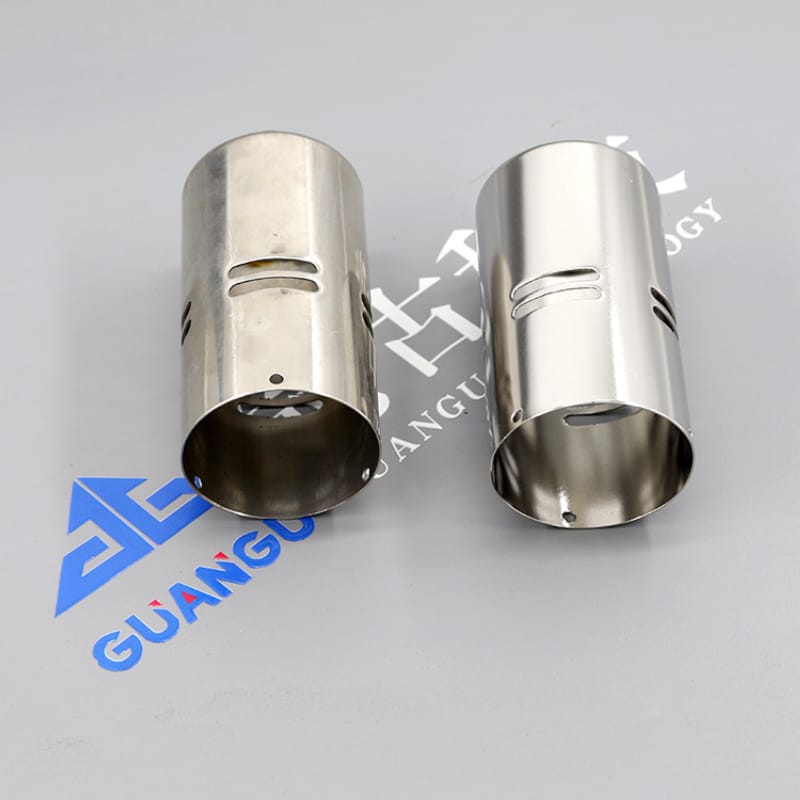
After switching to the Guangu magnetic polishing machine, processes such as workpiece deburring, surface brightening, and slight precision chamfering can be completed simultaneously in one go. Fine magnetic pins can penetrate into hidden positions such as workpiece inner holes, crevices, and cross-holes that manual grinding cannot reach, thoroughly cleaning internal burrs and stains. Throughout the process, the original tolerances and geometric profiles of the workpiece are not damaged, achieving comprehensive, dead-corner-free precision polishing.
The core problem of traditional polishing processes is “strong grinding, easy workpiece damage,” whereas the Guangu magnetic polishing machine adopts a controllable magnetic field vector grinding route. The core logic prioritizes ensuring that the original geometric profile of the workpiece does not deform and tolerances do not exceed standards, before selectively addressing surface flaws such as tool marks, burrs, oxide layers, and poor finish. It should be noted that for workpieces of different materials and thicknesses, such as stainless steel, copper, aluminum, and die-cast parts, the polishing allowance will have slight fluctuations, and adaptability needs to be evaluated in combination with actual working conditions.
Tailored Solutions for Your Manufacturing Needs
If you have processing requirements for workpieces of multiple specifications, please provide the workpiece dimensions, materials, and capacity requirements. The Guangu sales team will match you with the optimal machine model solution. We provide the following services:
Contact Information:
Professional manufacturer of magnetic polishing & deburring machines for metal,precision parts. View all posts by guangu_Germany
Matching polishing equipment for you based on your product and production capacity.
No account yet?
Create an Account
 Product Category – Mirror polishing machine
 Product Category – Magnetic Pin