
Suzhou Guangu
When many precision hardware processing factories first encounter a magnetic polishing machine, their core concerns—beyond precision and dimensional loss—revolve around production costs. Most clients wonder: Will the consumables of a magnetic polishing machine be expensive? Compared with traditional vibratory grinding and tumbling processes, is the overall cost more economical? Can long-term mass production effectively control factory expenditures? In reality, most manufacturers focus solely on the unit purchase price of the equipment while overlooking the hidden expenses in the polishing process, such as consumable wear, labor costs, rework and scrapping, and auxiliary material disposal. It is precisely these costs that erode the processing profits of a factory. Combining real mass production scenarios, this article provides a comprehensive comparison of the full life-cycle production costs between magnetic polishing and traditional polishing processes.
The mainstream traditional vibratory grinding and tumbling processes used by conventional metal polishing machines rely on grinding stones, polishing sand, and polishing paste, all of which are disposable consumables with extremely rapid wear rates. After only a few dozen hours of equipment operation, a large-scale replacement of the entire abrasive set is required, and significant amounts of industrial cleaning agents must be used in conjunction during production. For small and medium-sized hardware processing factories, the monthly procurement of abrasives, replacement with new materials, and disposal of used abrasives constitute a fixed and substantial expense. Over the long term, this significantly compresses product profit margins.
Traditional polishing processes cannot achieve automated continuous production. During equipment operation, dedicated personnel are required for real-time monitoring, periodically manually replenishing abrasives, sorting workpieces, and cleaning equipment residue. These cumbersome manual operations not only increase factory labor salary expenditures but also extend the processing cycle for individual batches of workpieces, reducing overall production efficiency. The comprehensive labor cost continues to rise year by year.
For precision hardware workpieces with inner holes, threads, fine crevices, and blind holes, traditional rigid grinding processes have inherent shortcomings, making it difficult to thoroughly remove burrs, oil stains, and oxide layers in concealed locations. This leads to persistently high workpiece polishing defect rates and rework rates, with large quantities of semi-finished products requiring secondary processing or even entire batches being directly scrapped. Indirect costs such as rework losses, material waste, and schedule delays have become pain points that traditional polishing processes cannot resolve.
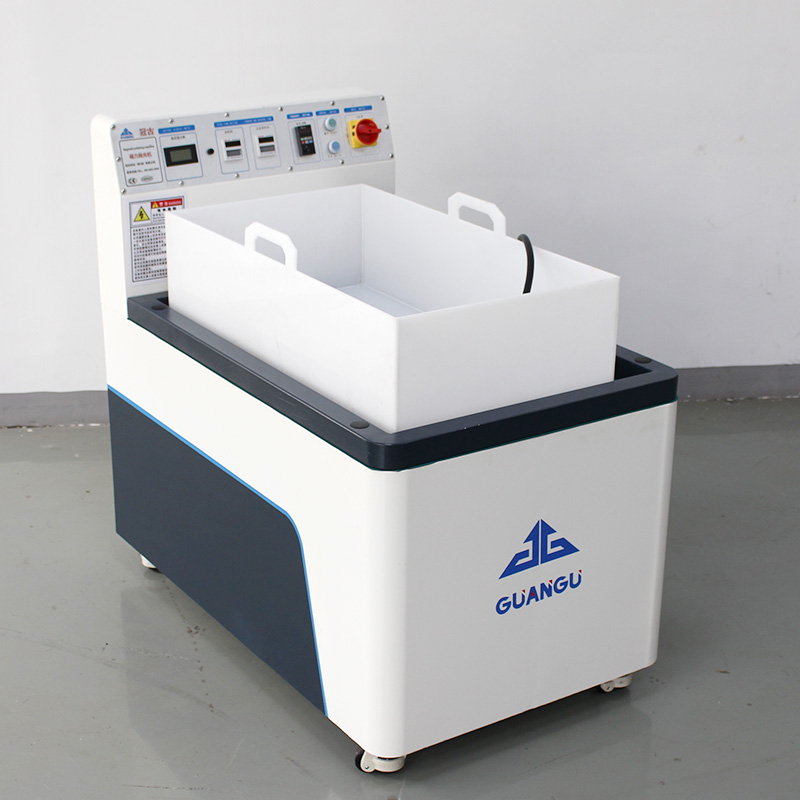
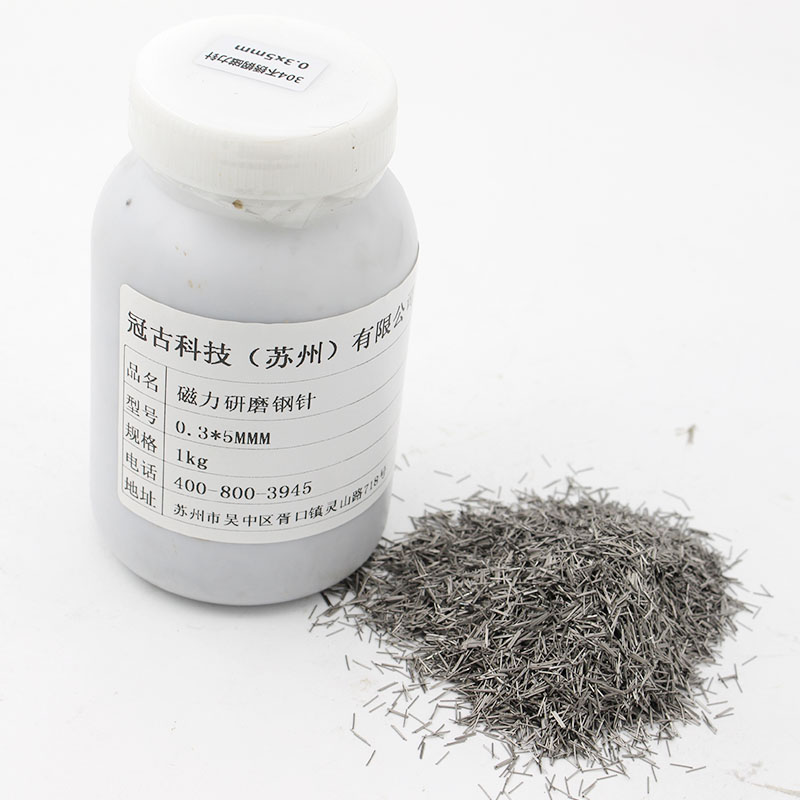
The Suzhou Guangu magnetic polishing machine, acting as an advanced magnetic deburring machine, completely revolutionizes the traditional polishing consumable system, fundamentally solving the industry challenge of frequent abrasive wear and high-frequency replacement. The equipment relies on an alternating magnetic field to drive SUS304 stainless steel magnetic pins to perform flexible grinding operations. Unlike traditional disposable abrasives, stainless steel magnetic pins can be repeatedly recycled and reused over the long term without requiring large-scale, frequent replacement. Under mass production conditions in factories, the comprehensive annual wear of magnetic pins can be stably controlled within 3%, significantly reducing basic consumable wear.
The entire Guangu magnetic polishing system requires only a small amount of specialized polishing grinding fluid as a routine consumable during production, eliminating the need for large expenditures on disposable abrasives. Meanwhile, the cleaning water used with the equipment can be recycled and reused, significantly reducing the frequency of auxiliary material procurement, waste liquid disposal costs, and environmental treatment expenses, thereby streamlining various expenditures in the polishing process from the consumable source.
Based on measured data from major hardware processing factories, consumable expenditures in traditional vibratory tumbling processes using a standard deburring machine account for approximately 65% of the total cost of the polishing process, representing an extremely high proportion. In terms of production efficiency, the processing duration for a single batch of workpieces requires 40–90 minutes, resulting in a lengthy processing cycle. The production process requires dedicated personnel for monitoring, replenishing materials, and sorting workpieces, leading to high labor input costs. Furthermore, due to process limitations, the workpiece defect scrap rate stably ranges from 8% to 14%, with material waste and rework costs further driving up overall production costs.
Leveraging the advantage of recyclable and reusable magnetic pins, the Guangu magnetic polishing machine reduces consumable wear to only approximately 15% of the total process cost, significantly cutting consumable expenditures. The efficiency advantage is remarkable: a single batch of workpieces requires only 5–12 minutes to complete polishing, with hundreds of workpieces processable per batch, effectively doubling mass production efficiency. Meanwhile, the equipment boasts a high degree of automation, allowing a single worker to supervise multiple machines simultaneously, substantially saving labor costs.
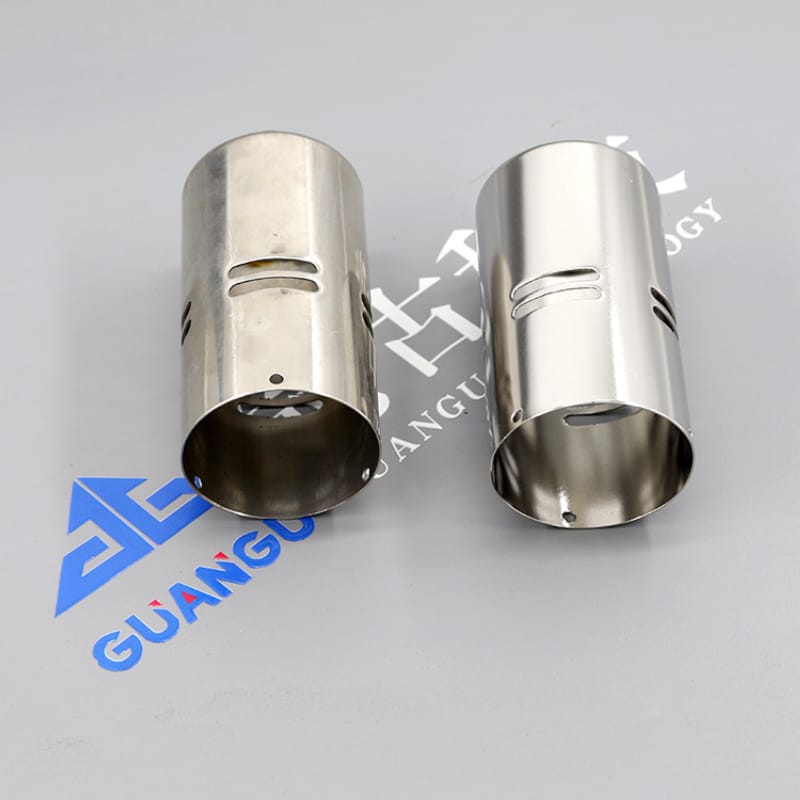
The equipment adopts a non-contact flexible grinding mode, ensuring that workpieces are neither bumped nor scratched during processing, perfectly preserving the original dimensions and profiles of the workpieces. Fine magnetic pins can penetrate concealed locations such as blind holes, cross-holes, thread crevices, and fine gaps, thoroughly removing burrs, oil stains, and tool marks. The workpiece yield rate can reach over 97%, essentially eliminating economic losses caused by batch rework and scrapping.
When clients first learn about magnetic polishing equipment, many mistakenly believe that the investment in specialized magnetic pin accessories is higher. However, when calculated over a long-term mass production cycle of six months to one year, the elimination of repeated large-scale purchases of disposable abrasives, significant reductions in labor costs, and substantial decreases in workpiece scrap losses—combined with these multiple advantages—reduce the comprehensive expenditure of the entire Guangu magnetic polishing process by 40%–60% compared with traditional polishing processes. The longer the production cycle, the more prominent the cost advantage and the more significant the profit improvement.
The Guangu magnetic polishing machine supports flexible parameter calibration, adapting to various workpiece materials and structures including stainless steel, copper and aluminum die-cast parts, precision CNC parts, new energy components, and medical accessories. A single machine can simultaneously complete multiple processes such as deburring, polishing and brightening, oxide layer removal, and oil stain cleaning, eliminating the need for multiple machines to process workpieces in sequence. This streamlines the production flow and significantly compresses the time costs and transfer losses associated with inter-process workpiece handling.
After multiple generations of mass production iterations, the equipment features a stable overall structure and a low failure rate, with no complex wear parts. Daily maintenance procedures are simple and require minimal workload, eliminating the need for substantial operation and maintenance expenses or manual inspection costs. The equipment demonstrates strong long-term mass production stability, perfectly adapting to uninterrupted batch production in factories.
It should be objectively noted that magnetic polishing is not a zero-consumable process. Stainless steel magnetic pins will experience micro wear over long-term repeated grinding, and grinding fluid also requires periodic, minor replenishment—both of which constitute normal operational wear. However, when compared with the continuous, large-scale expenditures on disposable abrasives, auxiliary materials, and waste liquid disposal inherent in traditional processes, the consumable consumption patterns and cost volumes of the two are entirely on different levels.
When factories procure polishing equipment, they must not focus solely on the upfront unit purchase price; a single low equipment price is meaningless. Only by incorporating all hidden expenses—including consumable wear, labor salaries, rework and scrapping, operation and maintenance, and time costs—into the full life-cycle cost accounting can factories select a truly suitable, high-quality polishing solution that enhances product profits for mass production. With its core advantages of low wear, high efficiency, and high yield rates, the Guangu magnetic polishing machine empowers precision hardware factories to reduce costs and increase efficiency.
If you are struggling with part burrs or surface finish issues, please feel free to consult us at any time!
We provide the following services:
Contact Information:
Professional manufacturer of magnetic polishing & deburring machines for metal,precision parts. View all posts by guangu_Germany
Matching polishing equipment for you based on your product and production capacity.
No account yet?
Create an Account
 Product Category – Mirror polishing machine
 Product Category – Magnetic Pin