
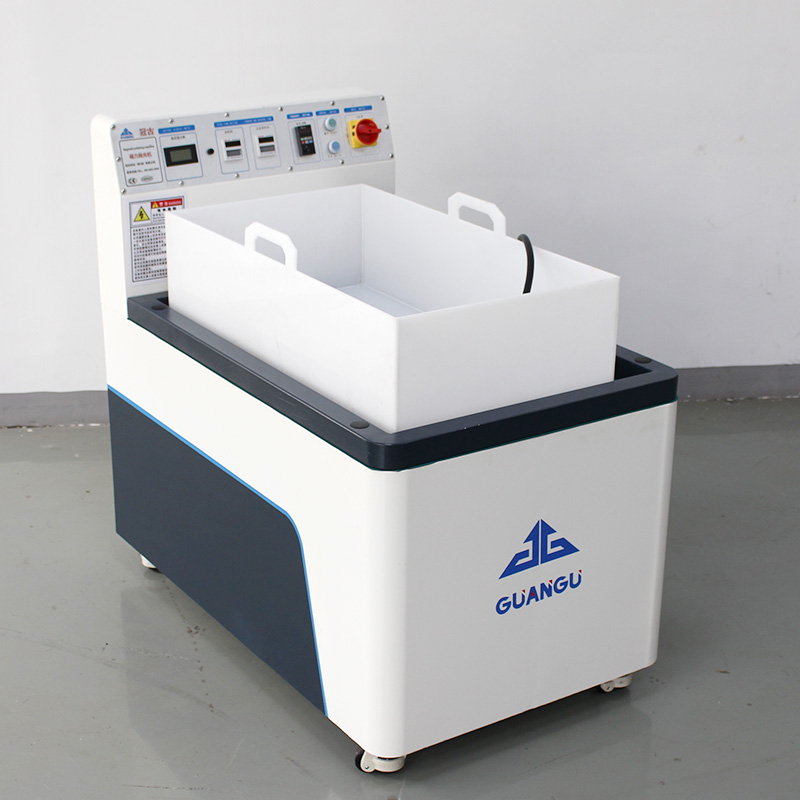

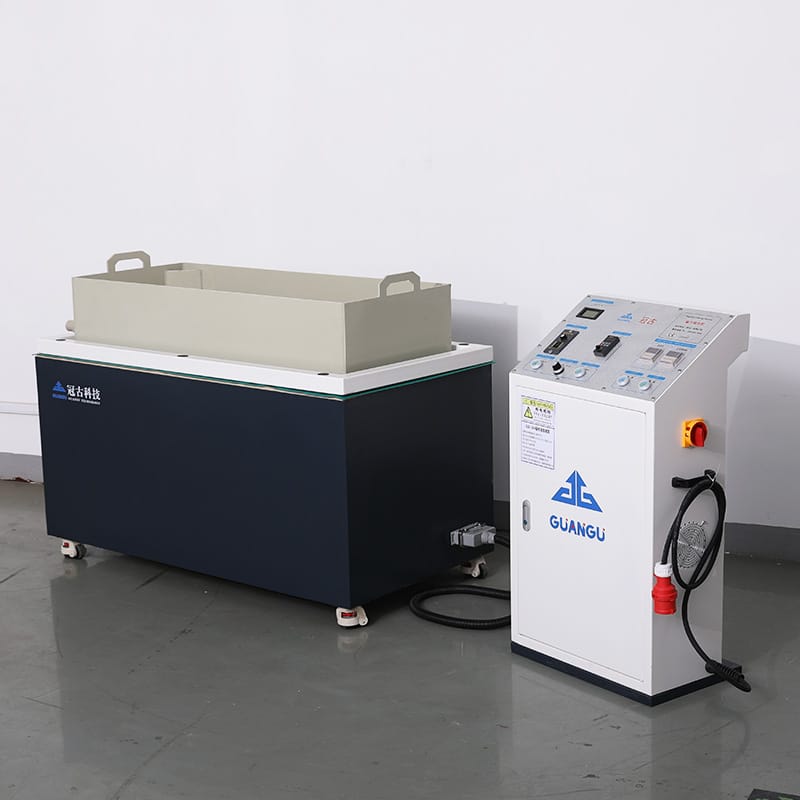
In the era of high-volume manufacturing, traditional manual buffing and standard rotary polishing are no longer sufficient to meet the demands of precision and speed. For industries seeking the ultimate balance of efficiency and cost, Magnetic Polishing Machines—specifically those from Suzhou GuanGu (Guangu Tech)—have emerged as the premier choice for professional metal surface finishing.
🚀 Why Suzhou GuanGu Magnetic Polishing Machines Lead the Industry
When scaling production, the “best” machine is defined by its ability to maintain quality while reducing overhead. Here is how Suzhou Guangu redefines industrial metal polishing:
Traditional polishing can take hours; Guangu’s magnetic technology completes the cycle in just 5 to 15 minutes. By utilizing high-energy magnetic field forces to drive stainless steel pins, it processes hundreds of small parts simultaneously, ensuring a consistent finish across every single piece in high-volume batches.
Unlike traditional dry buffing, which creates hazardous dust and fire risks, Guangu machines use a wet polishing process.
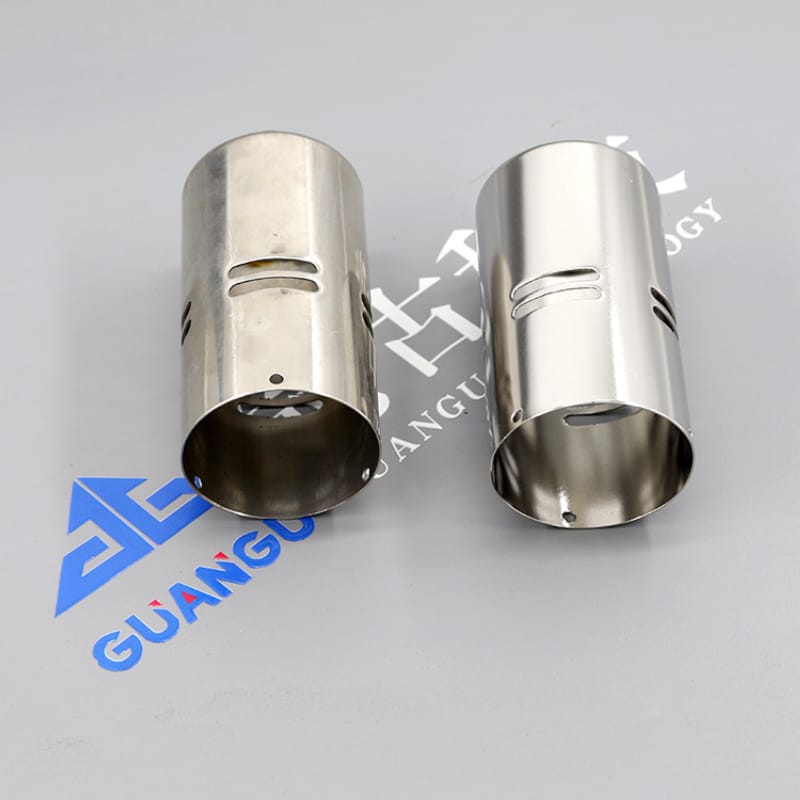
The magnetic pins are fine enough to reach internal holes, threads, and complex crevices that traditional machines simply cannot touch. It removes burrs and oxidization without deforming the workpiece or affecting its dimensional accuracy.
As a leader in the magnetic finishing sector, Suzhou Guangu (冠古) has built a reputation for industrial-grade reliability. Our machines are engineered for 24/7 continuous operation, featuring high-performance motors and robust control systems that withstand the rigors of heavy industrial use.
Industrial magnetic polishing machines provide significant advantages for manufacturers seeking higher productivity and consistent surface finishing quality. Unlike manual polishing methods, magnetic polishing uses magnetic fields and stainless-steel pins to reach complex geometries and hard-to-access areas.
For high-volume production environments, magnetic polishing machines reduce labor requirements, improve consistency, and shorten processing times. They are widely used in industries such as aerospace, automotive, medical devices, electronics, and precision metal fabrication.
Another major advantage is the ability to process multiple components simultaneously while maintaining a uniform finish. This makes magnetic polishing an ideal solution for companies looking to increase production efficiency without sacrificing quality.
In addition, magnetic polishing machines help reduce operational costs by minimizing manual work and reducing material waste. Their automated operation also contributes to better repeatability and quality control throughout the manufacturing process.
As manufacturing standards continue to evolve, industrial magnetic polishing machines remain one of the most reliable and cost-effective finishing solutions available today.
A magnetic polishing machine is a surface-finishing system that uses magnetic force and stainless steel pins to polish, deburr, clean, and finish metal parts efficiently. It is commonly used for precision components and complex geometries.
Magnetic polishing machines can process stainless steel, aluminum, brass, copper, titanium, zinc alloys, and many other metal materials used in industrial manufacturing.
Yes. Magnetic polishing is highly effective for removing small burrs, sharp edges, and surface imperfections while maintaining dimensional accuracy.
The processing time typically ranges from 3 to 30 minutes depending on the material, part geometry, surface condition, and desired finish quality.
Yes. Magnetic polishing machines are widely used in high-volume manufacturing because they can process multiple parts simultaneously with consistent quality and minimal labor.
Industries such as aerospace, automotive, medical devices, electronics, jewelry manufacturing, hardware production, and precision machining commonly use magnetic polishing technology.
Yes. The magnetic pins can access narrow gaps, internal holes, slots, and complex geometries that are difficult to reach with conventional polishing methods.
Magnetic polishing provides faster processing, better consistency, lower labor costs, improved surface quality, and greater production efficiency compared with manual polishing.
No. When properly configured, magnetic polishing is a gentle finishing process that improves surface quality without damaging the workpiece.
Polishing pins have a long service life and typically only need replacement after significant wear. The replacement interval depends on production volume and operating conditions.
Vibratory finishing is suitable for bulk finishing, while magnetic polishing offers higher precision, better access to intricate features, and superior finishing results for small and complex components.
The ideal machine depends on part size, production volume, material type, finishing requirements, and available workspace. Manufacturers should evaluate capacity, power, and automation features before purchasing.
For additional technical information and international standards related to metal finishing processes, manufacturers can refer to ISO and ASTM standards.
No account yet?
Create an Account
 Product Category – Mirror polishing machine
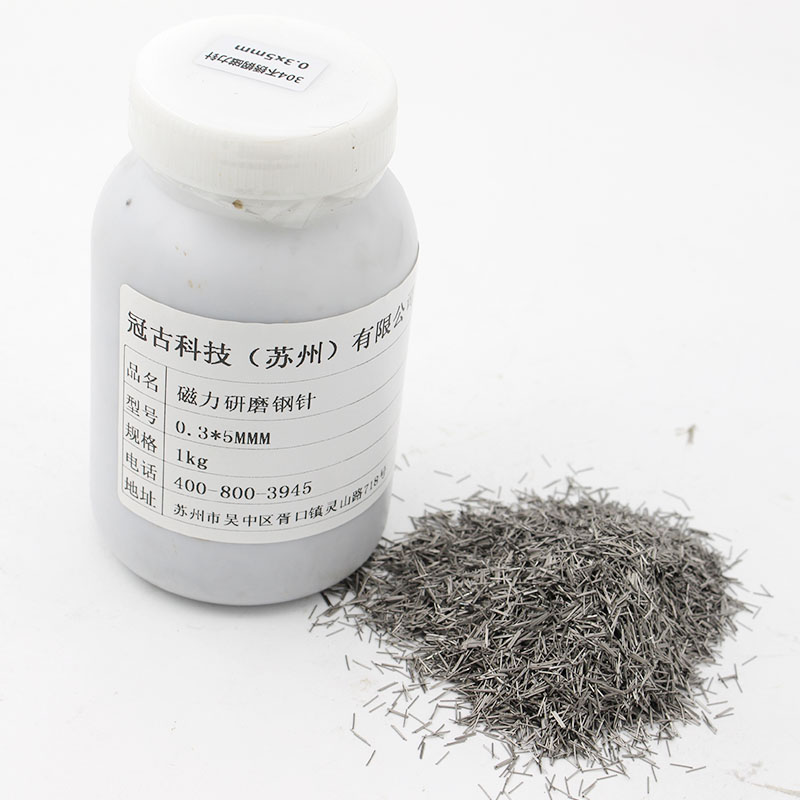
 Product Category – Magnetic Pin